
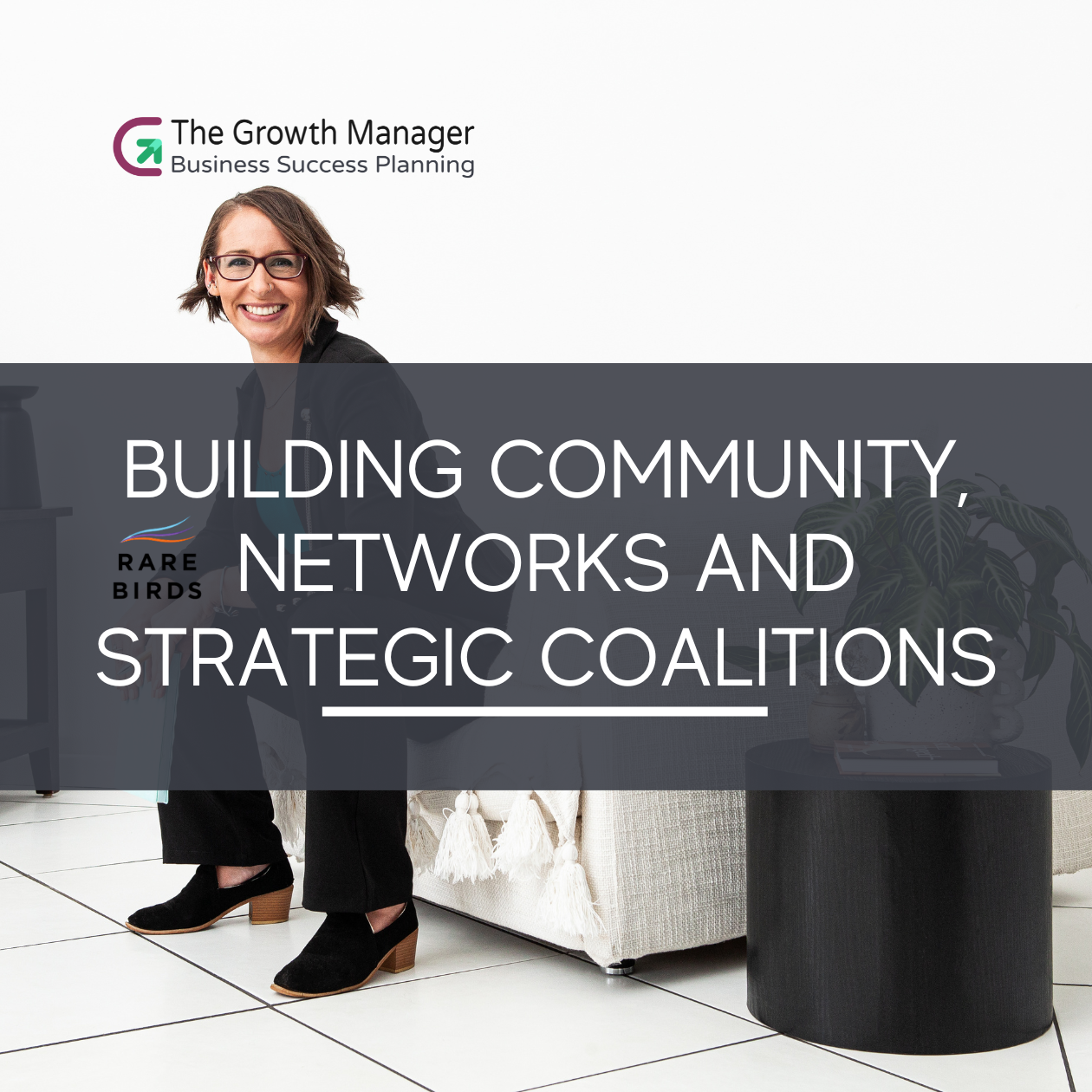
Why Traditional Networking Is Failing and What to Do Instead
The Networking Problem No One Admits
Most founders know they need to network, but what do they actually get out of it?
Few founders can clearly explain the benefits they receive from networking.
You attend events.
You meet people.
You follow up.
You meet people.
You follow up.
The results are often hit-or-miss, which points to a problem with the strategy.
The issue isn’t about motivation.
It’s a problem with the approach.
It’s a problem with the approach.
Recent talks at the Rare Birds Mentor Roundtable showed that things are changing:Traditional networking doesn’t match how today’s business communities and partnerships actually form.
 The Shift: From Networking to Community Building

The word “networking” brings up old ideas like:
- Transactional conversations
- Immediate ROI expectations
- Superficial interactions
For many people, this approach comes across as stressful and even causes anxiety.
A modern approach focuses on:
Intentional Relationship Building
- Focus on what you have in common, not just titles or status.
- Put building real connections ahead of making quick deals. Aim for ongoing conversations instead of one-time chats.s.
Instead of asking:
“What do you do?”
“What do you do?”
Ask:
“What’s been exciting you lately?”This simple change leads to deeper conversations, not just surface-level talk.
“What’s been exciting you lately?”This simple change leads to deeper conversations, not just surface-level talk.
Building a community is more valuable than just having a list of contacts. It’s better to be relevant than to simply reach a lot of people.
Why Traditional Networking Fails
The problem isn’t about how hard you try, but about using the right strategy.
Traditional networking often leads to:
- High time investment with unclear outcomes
- Forced conversations
- Low-quality connections
Founders often spend time and money on events but don’t see real results.
The model is outdated because:
- Business is now relationship-driven
- Trust takes time to grow; it doesn’t happen in a single meeting.
- Opportunities come from joint goals, not just being in the same room.
The New Model: Give First, But Organise It
Being generous can help your business grow. Generosity needs structure to avoid liability.
What Works
- Share one clear, valuable insight.
- Engage consistently, especially by sharing helpful content that can reach many people. through content.
What Does Not Work
- Overgiving without boundaries
- Solving everything for free
- Mixing up what you give for free and what you charge for
Unstructured giving leads to:
- Burnout
- Lost revenue
- People may not see you as an expert.
Structured generosity builds: Achieving the right balance is key to growing your business steadily.r stable growth.
A Functional Framework for Successful Businesses embeds generosity in its operating model and systems.
Examples include:
- Lead magnets
- Free webinars
- Educational blogs
- One-time strategy sessions
- Value-driven social content
Doing this leads to:
- Clear entry points
- Defined boundaries
- Scalable impact
The idea is simple:
Give enough to build trust.
Keep some things back to protect your value.
Keep some things back to protect your value.
Collaborative Alliances: Don’t Say Yes to Every Offer
Not all collaborations deliver equal results.
Many partnerships happen just because the opportunity arises, not because the fit is right.
This leads to:
- Confusion
- Misaligned audiences
- Limited results
A Better Approach: Use a Partnership Filter
Evaluate every opportunity against:
1. Values Alignment: Do you operate in the same way?
2. Audience Fit: Do they reach your ideal client?
3. Credibility and Consistency: Are they reliable and established?
4. Mutual Benefit: Is there clear value for both sides?
Partnerships are more than just working together. They are also a way of endorsing each other. When you partner with someone, you are vouching for them to your audience.
Use a Partnership Checklist, Not Just Your Gut
Making decisions based on feelings alone can lead to mixed results. High-performing businesses remove this risk by using:
- Checklists
- Matrices
- Defined criteria
This ensures:
- Dependability in decision-making
- Strategic harmonization
- Long-term value
It also protects against:
- Saying yes too quickly
- Overcommitting
- Misaligned collaborations
Community isn’t just another marketing tool. It’s a key part of your business strategy.
Building community should be at the heart of your strategy, not just an extra. It’s not just a side project. nity is a core growth driver.
What Community Actually Does
- Creates consistent visibility
- Enables peer learning
- Builds long-term trust
- Lowers reliance on constant selling
Even more important, it changes the order in which you build your business:
Old Model:
Create offer → Find audience
Create offer → Find audience
New Model:
Build audience → Shape offer
Build audience → Shape offer
This approach lowers your risk and helps you create products that people actually want.
How to Build Community Strategically
Effective approaches include:
1. Start Before You Launch
Commence by gathering people who care about the problem you want to solve.
2. Create Shared Spaces
Create groups, programs, or events that allow people to connect and interact. Encourage Peer Learning
The strongest communities are not dependent on you.
4. Design for Contribution
People stick around when they feel included, not when they feel like they’re just being sold something.
The Missed Lever: Asking
Most founders are comfortable giving.
Few founders are comfortable asking.
This can quietly restrain your business. Opportunities often exist but remain unused because they are never requested.
The Reality
- People in strong networks usually want to help each other.
- Relationships grow stronger when both sides give and receive.
- Asking for help is a normal part of forming strong relationships, not a sign of weakness.
When you consistently give:
You earn the right to ask.
The Real Growth Strategy
Growth is no longer driven by:
- Number of contacts
- Number of events
- Volume of outreach
It is now driven by growth, which depends on relationships.
- Consistency of interaction
- Alignment of values and direction
This shift makes a big difference.
Stop Networking. Start Building.
Here’s the main point:
- Community replaces transactions
- Generosity must be structured.
- Partnerships must be evaluated.
- Asking must be normalised.
This is not a tactic.
Make it a habit to build community, give generously but wisely, and carefully choose your partnerships every day.
Start today by using these ideas to help your business grow in a steady and lasting way.